

Note value exercises are immensely important. But practical note value exercises are not that easy to find. And learning note values purely in theory usually turns out to be pretty dry and boring. Who feels like sticking with that? That’s why we have put together a few exciting note value exercises for you. With our 4 steps, learning note values becomes much easier.
Pitch and Note Value Exercises
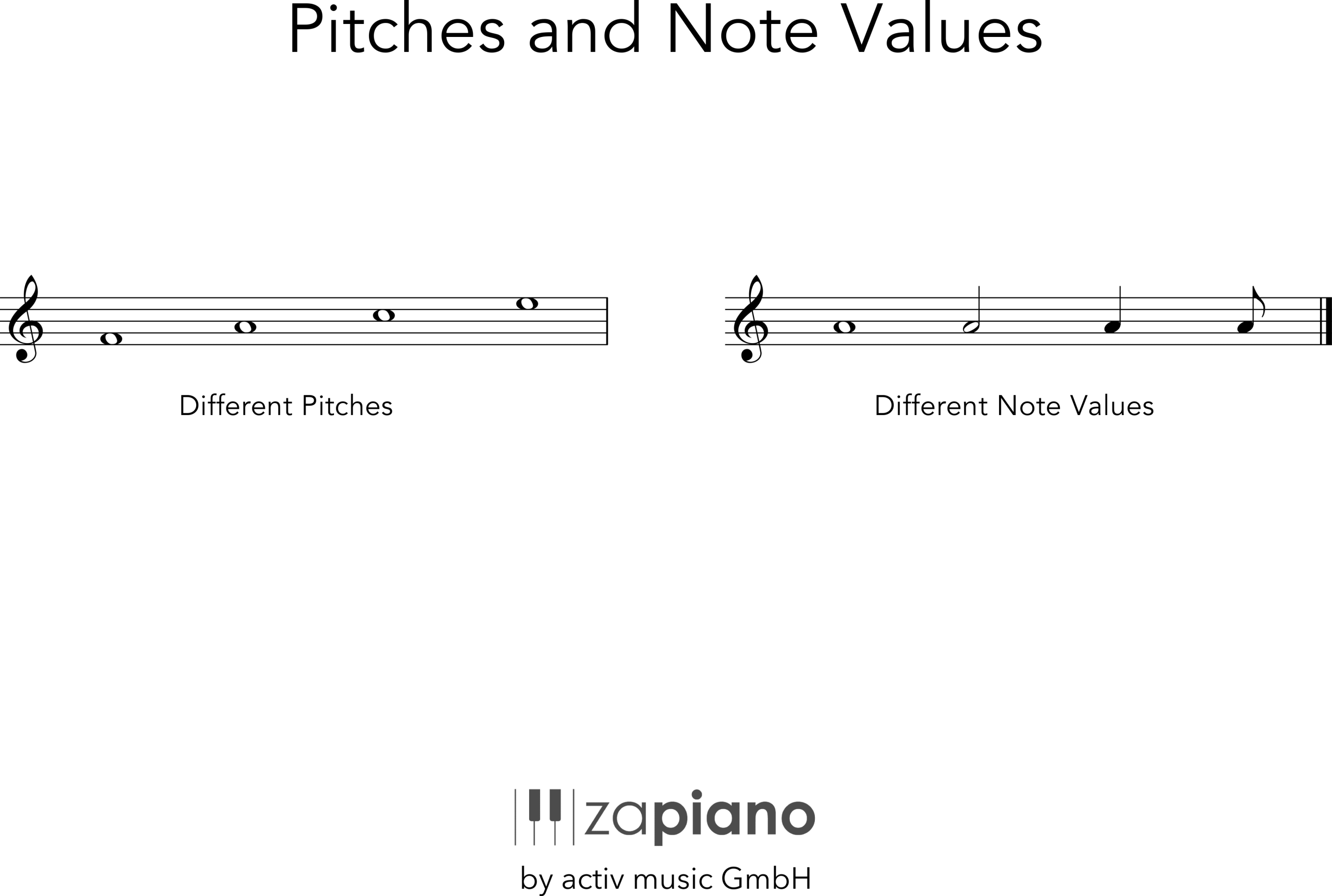
First of all, for the note value exercise we need to distinguish between note values and pitches.
- The pitch is shown on the staff by the position of the note head.
- The note value, on the other hand, tells you how long a note is held, e.g. whole note, half note, …
Note Value Exercises According to the Zapiano® Method
According to the Zapiano® Method, we start by doing pitch exercises and note value exercises separately from each other. You’ll see that this makes it much easier to internalize the note value exercises. Feel free to try out our note value exercises yourself right here.
1. Read and Clap Whole Notes
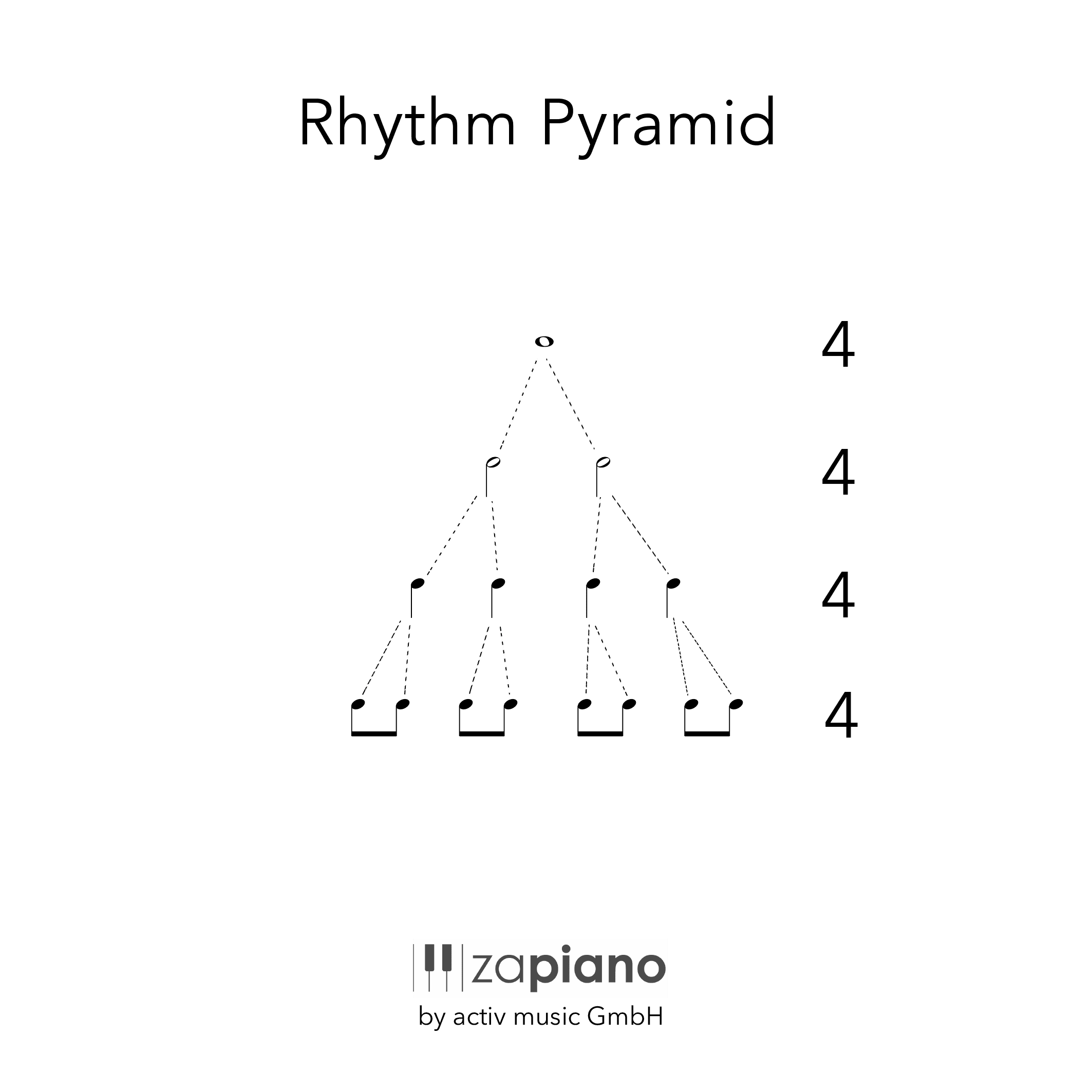
In the first step of the note value exercise, start with the simple note values. Begin with the whole note. It falls on beat 1. First, we only read the notes. You can also clap the note while you read it. Or you’re welcome to add the metronome while reading the note values.
What matters in this step: we are not playing yet. For now, we only read the note and add the rhythm to it.
By the way, in Piano Starter 1 I explain how to clap correctly. You can try the course with no obligation – you’ll find the free trial lesson at the end of this article.
2. Read and Clap Half Notes and Quarter Notes
Once the whole notes are going well, you can gradually add half notes and quarter notes. As in step 1 above, read the notes while you clap or while the metronome is running. Stay with this note value exercise until you have really internalized this step.
3. Play Simple Notes on the Piano
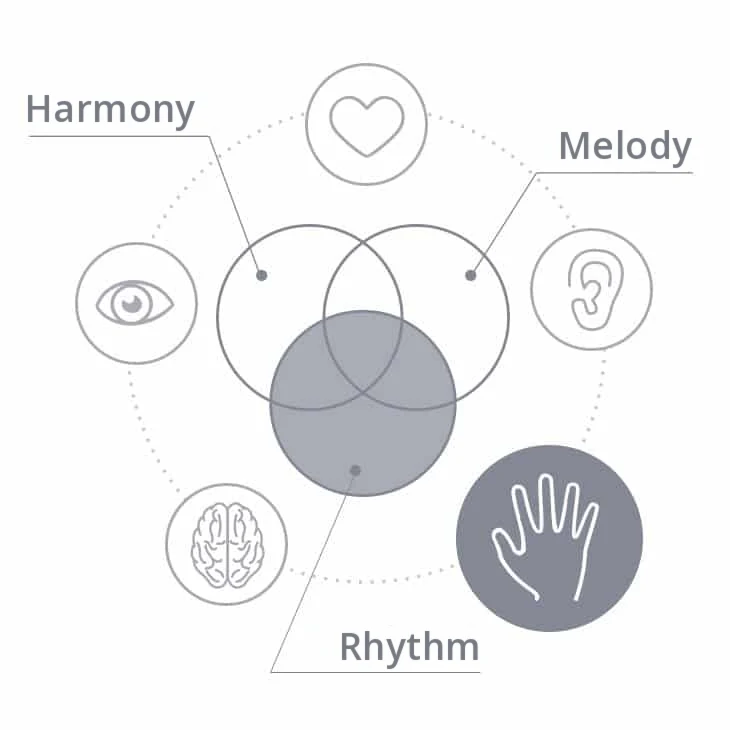
Now gradually take the whole, half and quarter notes and play them on the piano as well. Take your time with this step. Is it going well? Then you can move on to step 4 of the note value exercise.
4. Play Eighth Notes
Now you can add eighth notes as well. This may be a little tricky at first, but you’ll see: the more regularly you practice it, the better it gets. Later on, offbeats will be added too.
You can hear where all of this leads in boogie woogie, for example: this style lives on driving eighth notes, syncopation and the typical shuffle feel. Without secure eighth notes, nothing works there.
The Goal of Note Value Exercises
According to the Zapiano® Method, we don’t practice anything without knowing what we can use it for. So why are these note value exercises so immensely important? Our goal is that, with the help of note value exercises, you will eventually be able to read rhythms at first sight. How can that work?
Storing Rhythms
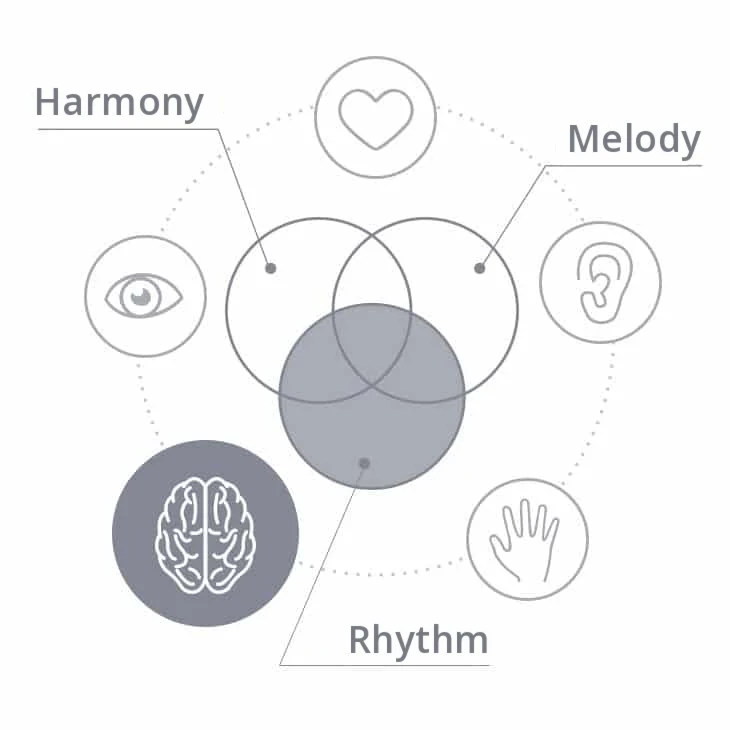
As you learn music with Zapiano®, you will come across similar rhythms again and again. The more often this happens, the sooner your brain will memorize certain rhythms. As a result, at some point you will be able to read rhythms immediately as soon as you see them in your piano sheet music. It becomes automatic. You no longer have to think about it consciously. And that is our goal at Zapiano®.
From Note Value Exercises to Improvising
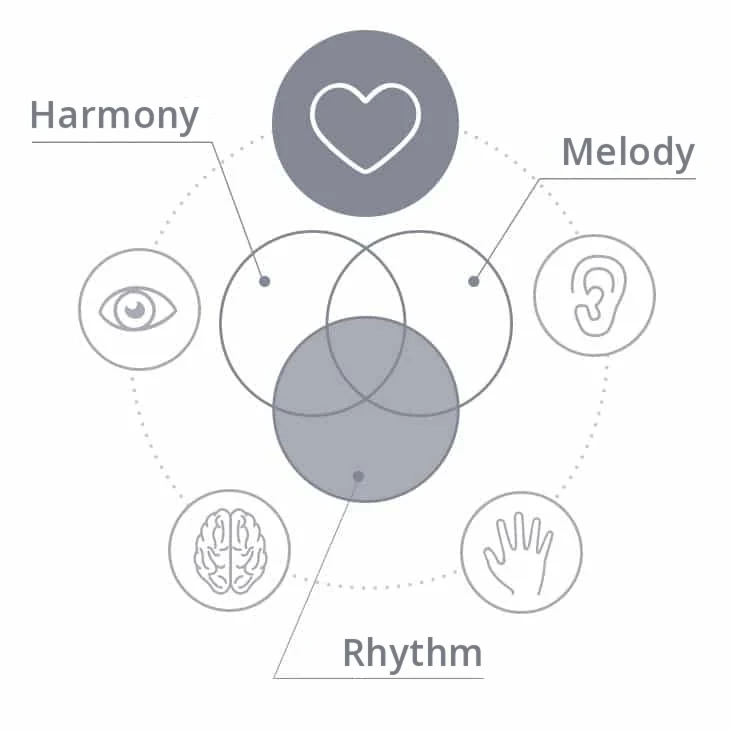
It gets really beautiful when you start to improvise. Just imagine: you recognize the rhythm right away because it’s already in your musical backpack. And you simply call up that knowledge. Without thinking. Completely automatically. You don’t need extensive knowledge for this. Nor do you have to play an awful lot of notes. What matters is that the rhythm is solid. And over time, you’ll be able to pull it out of your sleeve with ease. To others, it looks as if you’re incredibly talented, because it sounds so amazingly good. But really, it has simply been practiced correctly according to the Zapiano® Method 😉
Try the Zapiano® Method
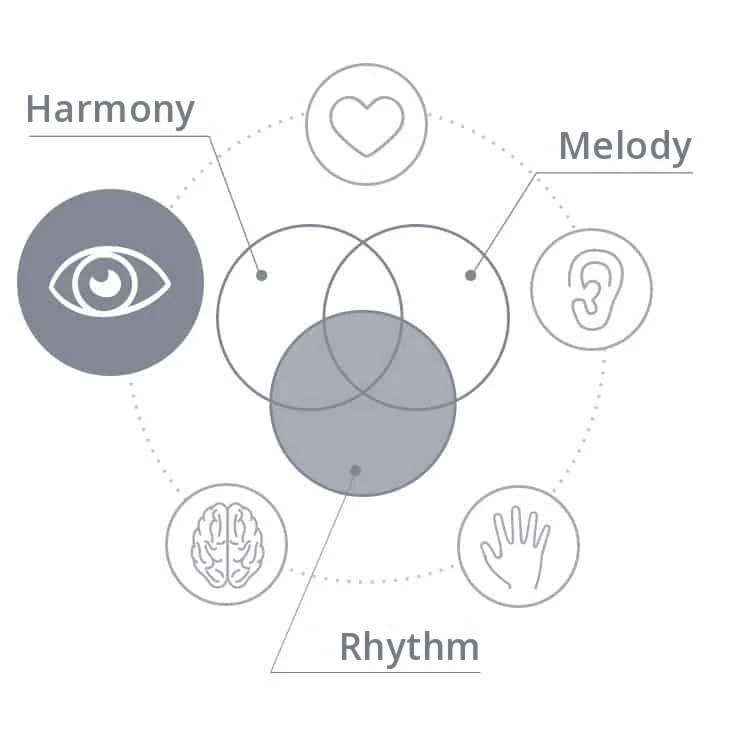
If you enjoyed our note value exercises above, we would like to invite you to try the Zapiano® Method for free. At Zapiano®, we learn the piano holistically, with all our senses, in our interactive piano courses. You can learn to play the piano comfortably at home with your tablet, whenever it suits you. And yet you are never on your own. You can ask your questions right below the lesson and get an answer there. Once a month, as a Zapiano® student, you have the opportunity to send us a video of your piano playing. You will then receive feedback from one of our Zapiano® coaches. And last but not least, you can exchange ideas with other Zapiano® students in the Zapiano® Community if you like. There is a lot of inspiration to discover there. So just take a look. Below, you can sign up for a free trial lesson 🙂