

If you’re interested in bass clef exercises, you’re probably already somewhat advanced at the piano. If you’re still a beginner, bass clef exercises don’t make much sense for the time being. In this blog, we explain why.
Bass Clef Exercises Are Not for Beginners
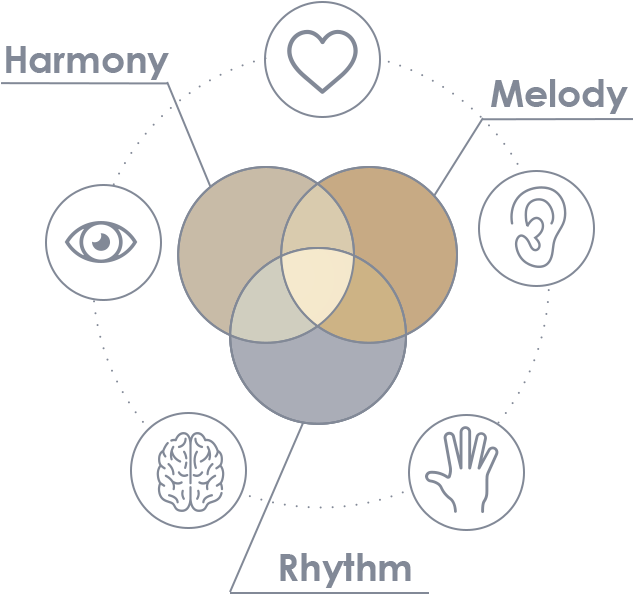
According to the Zapiano® Method, we always learn to play the piano holistically, with all our senses, i.e.
- reading, hearing and touch, as well as feeling and understanding.
And over the course of our 35 years of teaching experience, we’ve found that if you learn the bass clef right from the start and push bass clef exercises, you’ll still sound as if you were “playing a typewriter” even after two years.
It usually doesn’t really sound like “beautiful, expressive piano playing.” The simple reason is that your mind needs time to process the information correctly. Imagine reading two staves (treble and bass clef) at the same time – then there are your 10 fingers, and on top of that you’re trying to get into the flow of playing. For the vast majority of people, that’s completely overwhelming. That’s why it makes no sense to learn the bass clef right from the start. We don’t start learning it until the Piano Starter 2 course.
Lead Sheet or Classical Notation (with Treble and Bass Clef)
In more modern music, at some point people stopped notating the bass clef part in detail. Instead, it’s enough to give, for example, the chord progression and the melody in a simplified form, as we know it from a lead sheet. That may sound confusing at first. But because there are no fixed rules for the bass clef, you as the performer have maximum freedom to interpret and arrange the music. This is where you can really let your creativity run free. You can read about the role that written-out sheet music and lead sheets play in learning the piano in my blog on piano sheet music.
Advantages of Bass Clef Exercises
If you prefer to play more precisely “by the notes,” however, the bass clef also has big advantages. If you can read the bass clef, you’ll quickly get a very precise idea of what exactly the composer wrote. This is particularly interesting in classical music. You can see exactly what the composer had in mind for the bass clef part. From Piano Starter 2 onward, most Zapiano® compositions are also notated in treble and bass clef. This gives you the opportunity to play the pieces exactly as written. At the same time, however, you learn how to shape them more freely and put your own stamp on every piece. You’ll learn how to do this in great detail in the course.
Of course, when you have notes in the bass clef in front of you, you tend to just “play them off the page.” That puts certain limits on creativity. But bass clef exercises are definitely helpful if you want to play very complex accompaniment patterns that are hard to pick out by ear. With the notes in front of you, you can understand much better what the composer wrote down. Especially in classical music, the left hand is often notated in the bass clef in a fairly complex way. That’s where the bass clef is definitely an advantage: depending on the piece and level of difficulty, you naturally have many more ways to express yourself.
But this doesn’t only apply to classical music. In boogie-woogie, too, the left hand has a task of its own: it plays a driving bass figure, usually at a fast tempo, while the right hand takes the melody. With the notation in front of you, you’ll often recognize the underlying pattern faster than if you figure it out by ear, note by note.
When Do Bass Clef Exercises Make Sense?
If you’d like to start doing specific exercises already, here’s how you can go about it: the Tenuto app, for example, is great for practicing reading music.
But the following approach is even better, because you learn several things at once:
- Take a blank sheet of staff paper (manuscript paper).
- Then choose the key. As a beginner, this will probably be C major, so white keys only.
- Then choose a range in which you can move comfortably within the octave. Usually, this means having your fifth finger (the little finger) on the C below middle C and your thumb (the first finger) on the G.
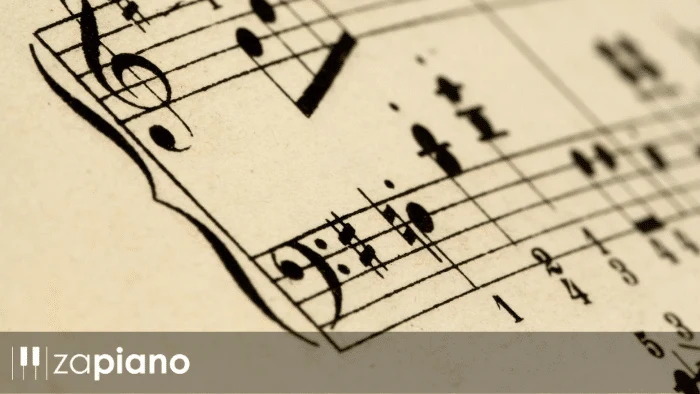
- Now draw various notes within this range on your staff paper. If you’re not sure what that looks like, take a look at the following graphic:
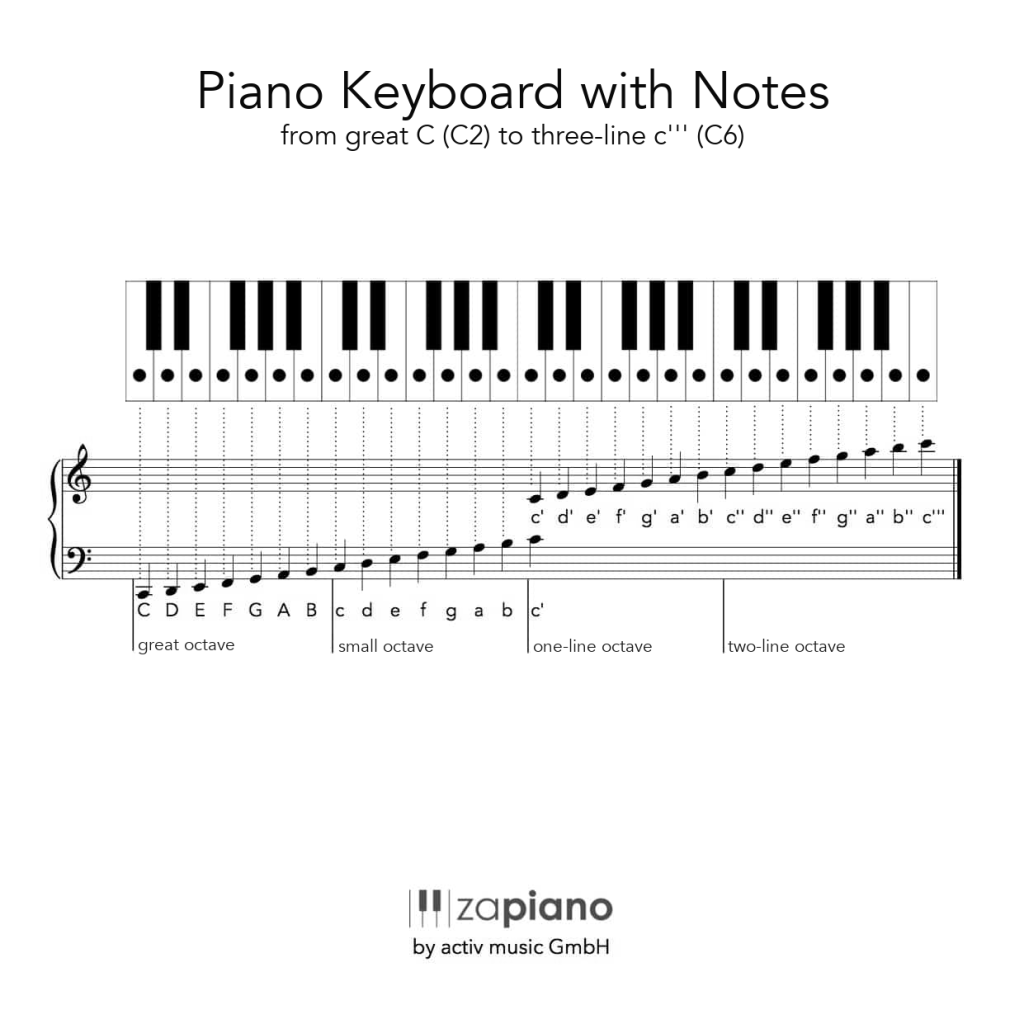
- Note values don’t matter at all here, and neither does the tempo.
- Once you’ve filled the sheet with notes from this range, you can also write the note names next to them if you like.
- Then it’s time to play – or rather, practice. Be aware that playing these notes is an exercise. Through your eyes, your mind now connects what’s written and carries it out with your fingers.
Of course, this is a far cry from relaxed piano playing. However, it’s the first step toward making friends with the bass clef. Over time, it’ll become easy, and when you have a written-out piece in front of you, you’ll get straight into making music. That’s what I wish for you.